How Envision Partners helped turn a founder’s everyday frustration into a working prototype ready for user testing.
Choosing what to wear should be a small decision. For the founder of the startap, it was taking more time and attention than it deserved.
His idea was straightforward: an application that understood the clothes he already owned and helped him choose an outfit for work, travel, or a social occasion. He wanted to build something useful for himself first, with the possibility of opening it to others later.
Envision Partners helped turn that idea into a defined product experience and a functional prototype in approximately four weeks
The challenge: deciding what to build first
The idea was easy to explain. Making it work required answering a series of connected questions.
How would someone add their clothes without spending hours entering information? What could AI identify from a photograph? Which preferences would make a recommendation useful? What would happen when the system misunderstood an item?
The first task was to define a version of the product that could answer those questions within a manageable scope.
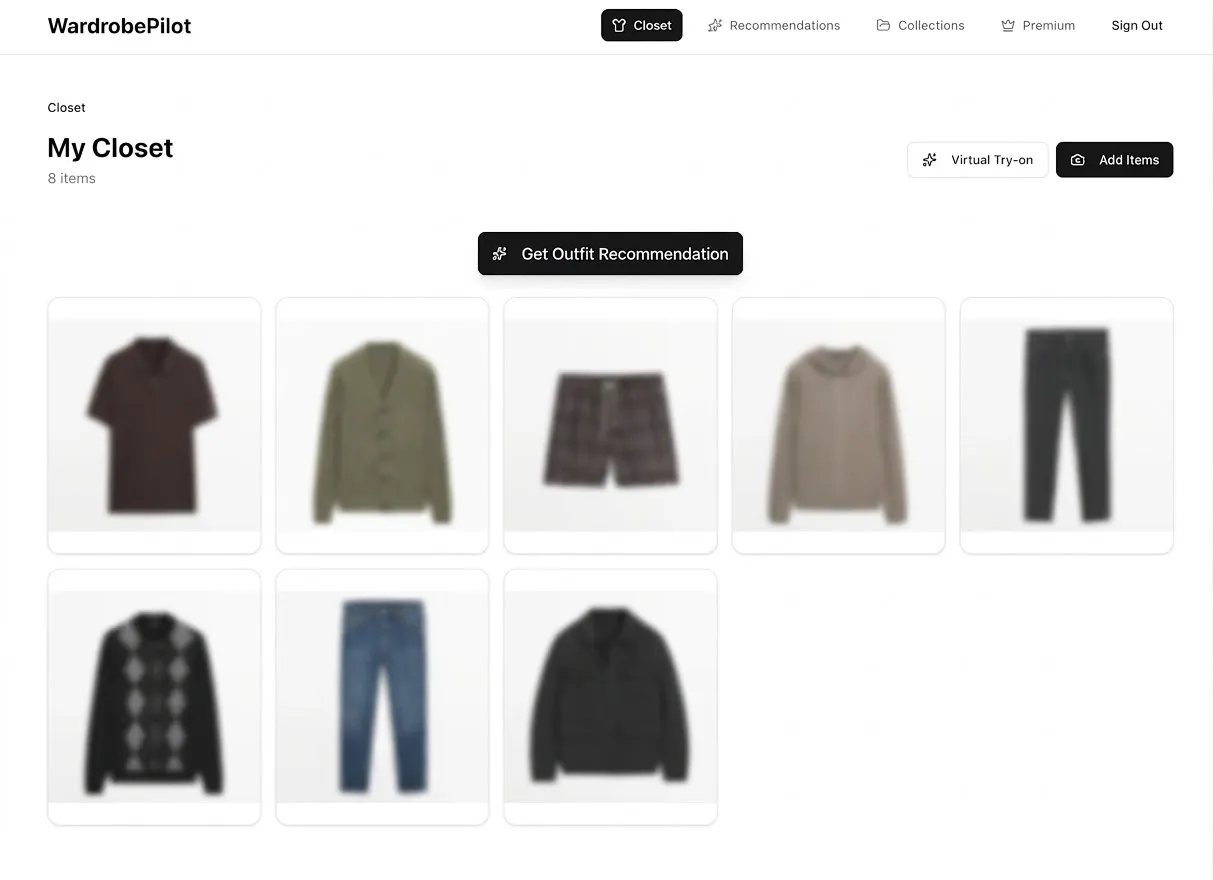
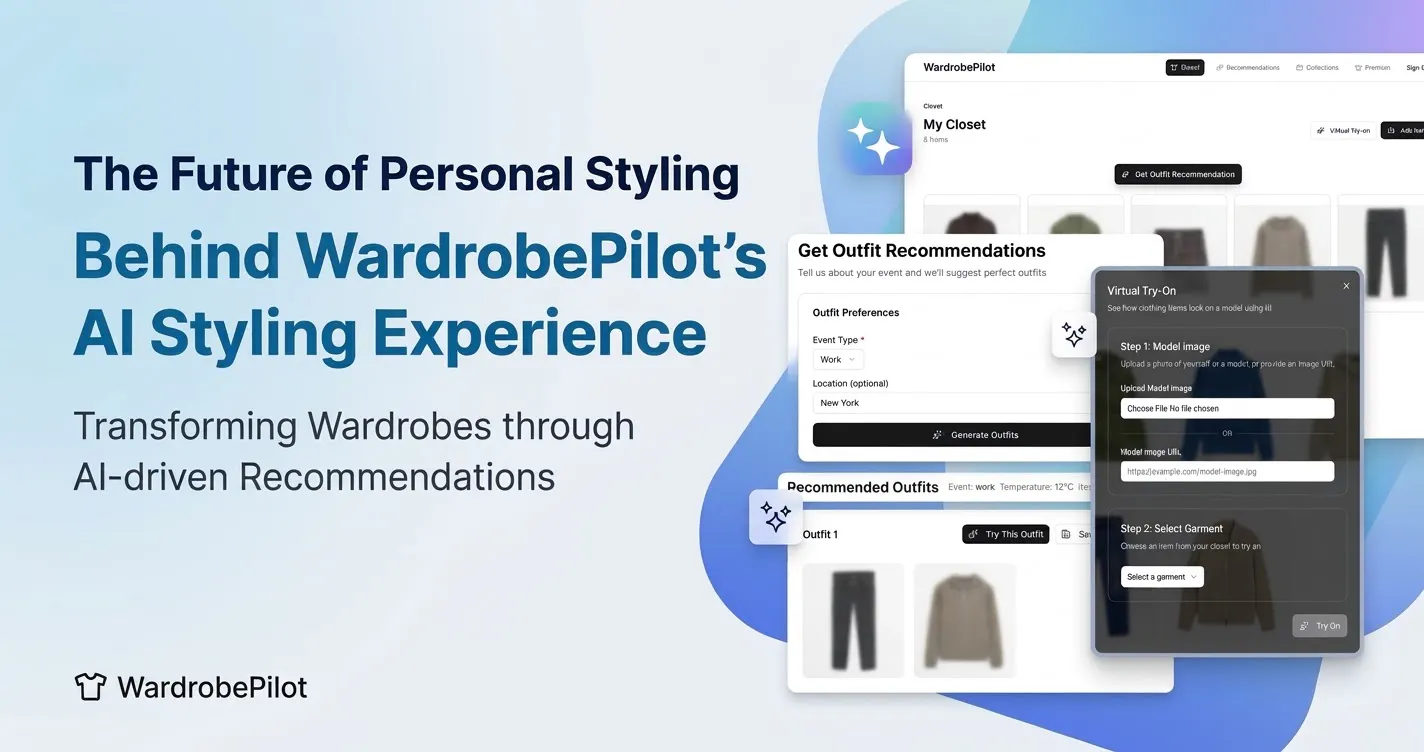
We focused on one complete experience: add clothes to a digital wardrobe, describe an occasion, and receive an outfit recommendation using the items available.
That gave the project a clear boundary. Every proposed feature had to help test that experience.
Making the experience work
We mapped the journey from account creation through image upload, clothing classification, wardrobe storage, and outfit selection.
This revealed the dependencies behind a seemingly simple interaction. A useful recommendation needed usable photographs, reasonably accurate clothing information, and enough context about the occasion.
We also worked through the points where users would need to intervene. An image might be unclear. An automatically assigned tag might be wrong. A recommendation might need refinement.
Review and correction therefore belonged in the core experience. Users needed a way to fix mistakes and keep moving.
The prototype focused on:
- Account creation and authentication.
- Photographing and uploading clothing.
- Building a digital wardrobe with AI-assisted tagging.
- Entering occasion details and preferences.
- Generating and reviewing outfit recommendations.
Features outside that flow were deferred. Privacy and data handling were considered from the outset because the product involved personal photographs and preference data.
Building for fast iteration
We chose a TypeScript-based approach to share tooling and parts of the implementation across web and mobile. Frequent deployments made it possible to review working versions as the product developed.
The AI work was separated into specific tasks: interpreting clothing images, assigning useful tags, and generating recommendations from wardrobe data and user context. This made it easier to inspect results and understand where changes were needed.
AI also supported the development process. It accelerated implementation and analysis, while the team remained responsible for product decisions, architecture, and testing.
Each iteration started with a defined behaviour and ended with a review of the complete flow. That kept progress tied to whether the product was becoming more useful.
The result
In approximately four weeks, we moved from an initial idea to a working prototype.
Users could create an account, upload clothing, build a basic digital wardrobe, and receive AI-assisted outfit recommendations based on their clothes and the context they provided.
The founder now had something concrete to put in front of external users. Instead of discussing how the application might work, he could observe how people used it and where it fell short.
The work also clarified what a production version would require: stronger evaluation of recommendation quality, better image handling, more detailed preference controls, further privacy safeguards, and systematic user testing.